Ancient Christian origins
The Christian history of Paris runs very deep, since Lutetia, its ancient name, was Christianized as early as the third century AD, in the time of the Roman Empire. Its first bishop was Dyonisius, remembered by posterity as Saint Denis. Although the first buildings dedicated to worship rose in Paris at that time, archaeologists lack the precise information needed to locate the city's old cathedral exactly. The origins of the site, then, remain partly wrapped in mystery.
Centuries of embellishment
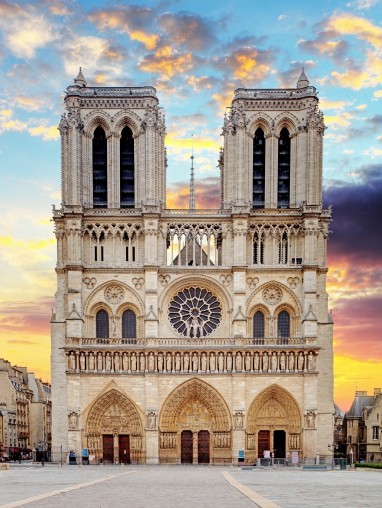
Once the cathedral had acquired its present appearance, the work did not stop but continued for centuries, in a process of constant embellishment. Between the end of the thirteenth century and the beginning of the fourteenth, the transept arms were widened, several chapels were arranged, and the great flying buttresses, which add so much to the elegance of the building, were put in place. Further modifications followed in the seventeenth and eighteenth centuries. Each era left its mark on the cathedral we know today.
From destruction to revival
Then came the upheavals of the Revolution, with their share of destruction. It was only in the nineteenth century, with Viollet-le-Duc's restoration, that this extraordinary monument was revived, the structure having suffered the ravages of time and of the sans-culottes. Notre-Dame then recovered the splendor that has carried it through the ages, and continues to draw visitors from around the world.