Logo Extime Hosted by ParisAéroport

Gabrielle d'Estrees and One of Her Sisters: a Louvre painting

Sometimes works outlive their makers. At the Louvre, you will find magnificent paintings whose artist never made it into the history books. Among them is the striking Gabrielle d'Estrees and One of Her Sisters, a work of the School of Fontainebleau painted in the late sixteenth century, around 1594. Extime Travel invites you to unravel one of the most enigmatic canvases in the museum.

Description of the painting

Gabrielle d'Estrees and One of Her Sisters is an oil on oak panel measuring about 38 inches tall by 49 inches wide (96 by 125 cm). A vast curtain of red silk opens onto two figures: two nude young women standing in a bath. One imagines it filled with milk or wine, a common practice at the time, both being prized for their supposed benefits. A pale white sheet is draped over the tub, a usual way to soften the cold bite of the porcelain.


The two women reveal their charms. The one on the left is thought to be Julienne d'Estrees, Duchess of Villars. She pinches the nipple of the other figure, her sister Gabrielle d'Estrees, while resting her right arm casually on the edge of the bath. Gabrielle stays still, an impish, enigmatic smile on her lips. Between her fingertips she holds a ring. It may be the coronation ring that King Henri IV gave her on March 2, 1599, a gesture that caused an immense scandal at court. Her other arm also rests on the rim of the tub.


The two sisters, holding themselves with regal poise, wear nothing but pearl-set earrings, the only sign of their rank. In the background, a seamstress or nurse is at work. A fire burns in the hearth, and a painting, likely depicting a nude man, hangs against the mantelpiece.

 

The secrets of Gabrielle d'Estrees and her sister

The painting carries an erotic charge that is at once unsettling and mysterious. For some, Gabrielle's nipple points to a recent pregnancy or birth. She did indeed give birth in June 1594 to a boy regarded as the natural son of her lover Henri IV. In that reading, the seamstress in the background would be sewing clothes for the young Cesar, and the pinching of the nipple would relate to breast milk rather than to any erotic meaning. The more somber background would then be a painful omen of Gabrielle's coming death.

Strong as the symbolism is, interpretations vary. The work may simply be the last in a series devoted to the mistresses of Henri IV. In that case the title Gabrielle d'Estrees and One of Her Sisters would be misleading: the second figure would not be Gabrielle's sister at all, but Henriette d'Entragues, who succeeded Gabrielle as the king's favorite.

Where to see it

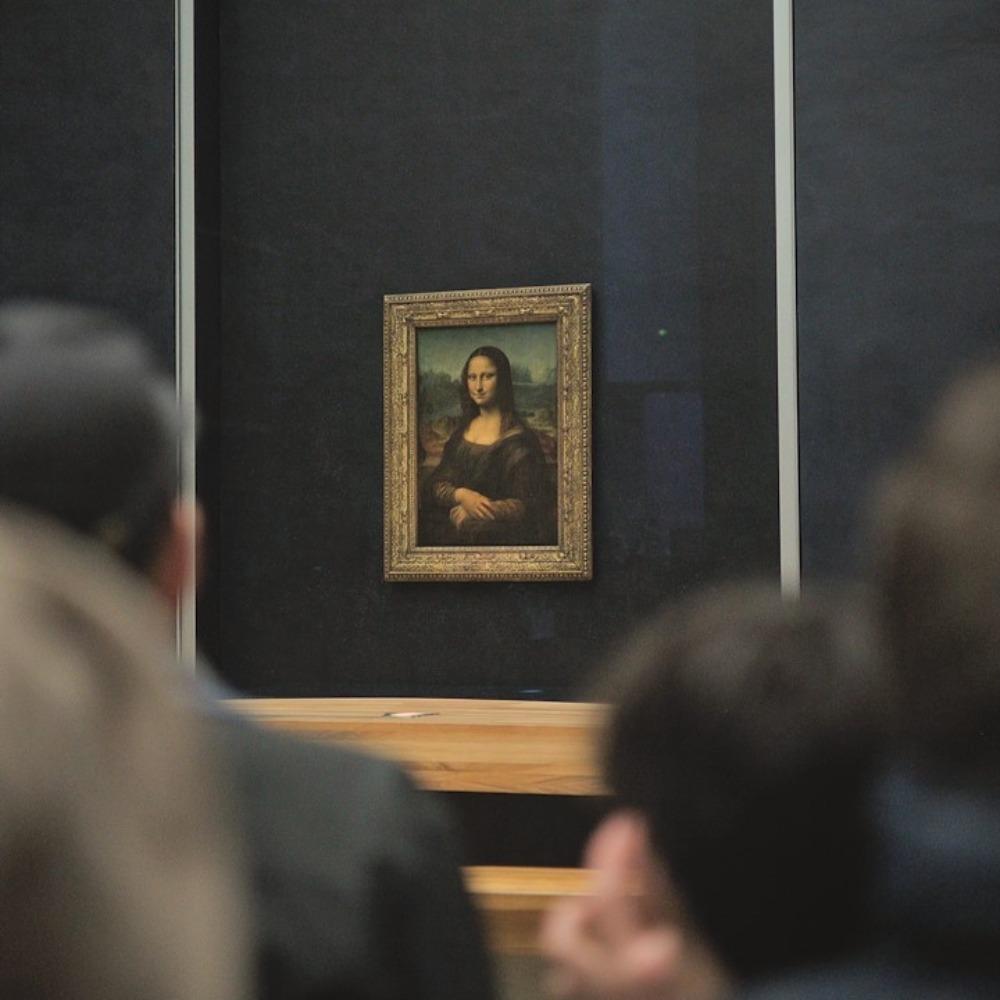
This magnificent and unsettling painting awaits you at the Louvre, in the Richelieu Wing, [Peint] Salle 824. It undoubtedly ranks among the museum's finest works, alongside The Wedding Feast at Cana by Veronese, the Mona Lisa by Leonardo da Vinci, and The Raft of the Medusa by Gericault.

You might also like