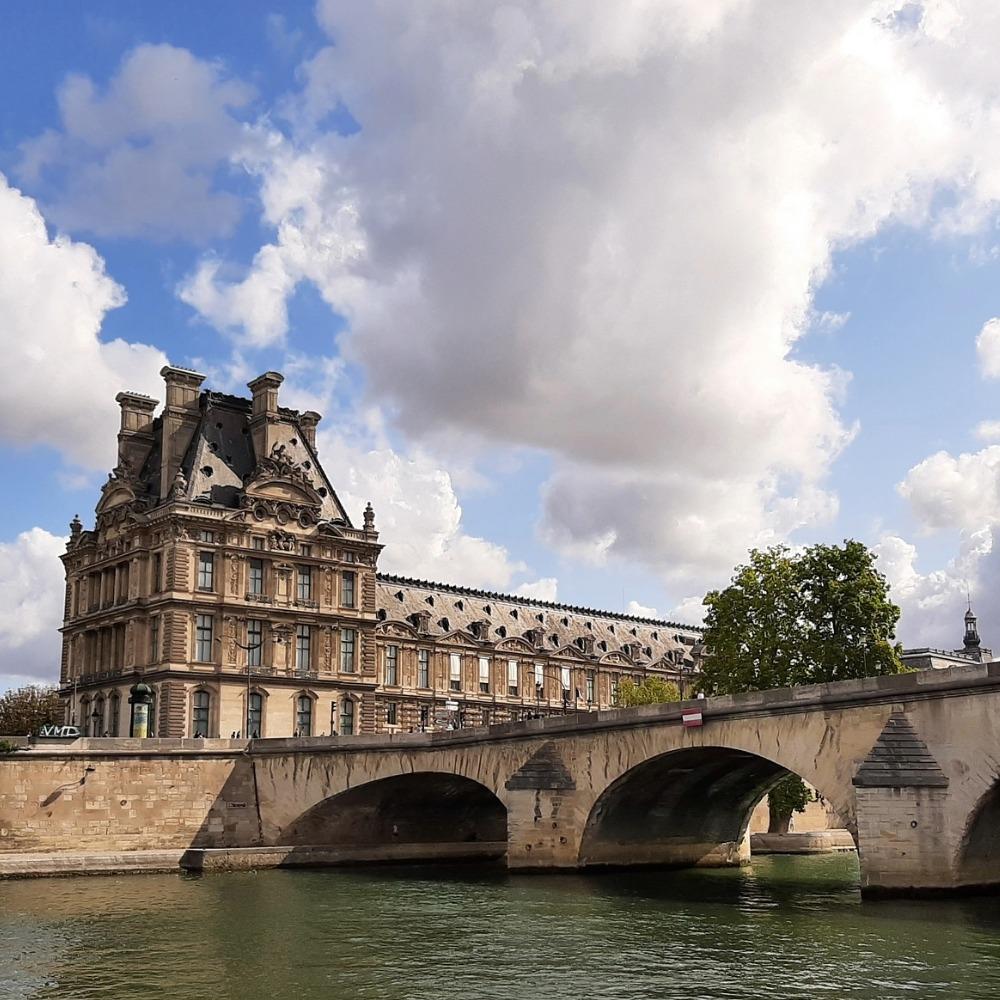
When you visit the Louvre, remember to look up: The Two Birds painted by Georges Braque await you overhead. Extime Travel invites you to discover a monumental work where contemporary art and the Renaissance meet in a single ceiling, a few brushstrokes away from five centuries of history.
The Birds, also known as The Two Birds, is a vast ceiling painting by Georges Braque, a French painter, sculptor, and engraver. In 1961, two years before his death, he became the first painter to be exhibited at the Louvre during his own lifetime, on the occasion of a retrospective. Braque is regarded as the father of Cubism, yet he did not confine himself to that style: he passed through a Fauvist phase, a thematic period, and a period of metamorphoses.
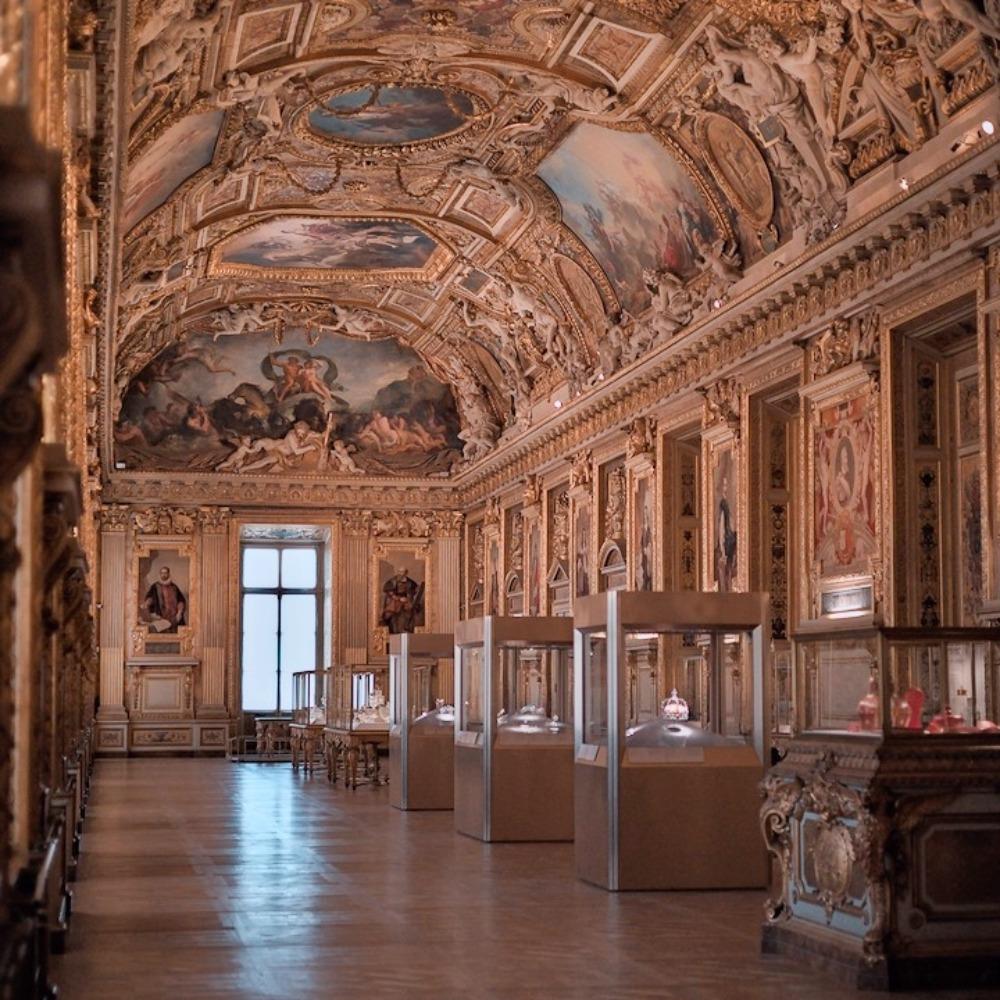
The Birds was created to decorate the ceiling of the Salle Henri II at the Louvre. This room was once the king's antechamber, and its ceiling had been adorned with canvases by Blondel. Damaged by time, they were eventually due for replacement. Braque completed this imposing work in 1953, commissioned by André Malraux, then France's minister of cultural affairs. The idea came from Georges Salles, who wished to show more works by contemporary artists.
Aged sixty at the time, Braque first hesitated, then, against his wife's advice, accepted the challenge. His initial sketch unsettled the museum's curator, who had hoped for something more classical. Despite these reservations, the project was approved, and it took the artist a full year to complete.
The bird is a recurring motif in Braque's work. His birds are never depicted realistically, yet their very simplicity lends his pieces a pared-back elegance. The motif appears in his work from 1929 onward, and he would paint it until his death in 1963.
The artist sought to free himself from reality. The fresco is in three parts, with the largest at the center: two birds entwined against a midnight-blue sky, lit by the moon and two stars. The moon recalls the emblem of Henri II. On the two other circular panels, two further pairs of birds appear. The deep blue, dominant across all three sections of this monumental work, gives the whole a sense of serenity. The white shapes of the birds evoke doves, symbols of peace, while their imposing size conveys a feeling of freedom and fullness.
By choosing not to render the birds realistically, Braque created a magnificent expanse of flat color that contrasts completely with the ceiling's ornamentation. The golden tone of the paneling marries perfectly with the deep blue, giving the painting an almost hypnotic quality.
The work had to be grand in order to blend with the sixteenth-century ceiling paneling. The result is a strikingly unusual ceiling, a masterful blend of contemporary art and the Renaissance that rewards every visitor who pauses to look up.