Logo Extime Hosted by ParisAéroport

The Virgin and Child with Saint Anne by Leonardo da Vinci

At the Louvre, several major works by Leonardo da Vinci await you, among them The Virgin and Child with Saint Anne. Begun in 1503, this painting occupied the artist for years yet remained unfinished at his death in 1519. 


Extime Travel guides you through the story of a canvas full of mystery and quiet emotion, where every detail seems to carry a hidden meaning.


Researchers have confirmed that the work was indeed left incomplete, and several discoveries point to it. First, numerous preparatory studies created for the painting, now held at the National Gallery, have come to light. They clearly reveal the evolutions and changes that took shape over time. Second, the scientists who carried out the painting's restoration in 2010 showed that the mountains in the background were never finished.


So why prepare a painting for so long, only to leave it unfinished? 

Leonardo da Vinci: the Virgin and Child with Saint Anne

This painting was most likely intended for Louis XII, king of France, in honor of his wife Anne of Brittany. 

How it came into French hands remains uncertain, though several theories attempt to answer the question. 

One account holds that the painting was never delivered, since it was seen in the artist's studio in 1517. 

Another suggests it was eventually acquired by Richelieu in 1651. 

The most probable explanation, however, is that François I purchased it for a considerable sum.

A painting reworked many times

Several copies of this work survive, allowing us to trace the changes the artist made. Comparing these copies with the various preparatory studies reveals that the figures shifted their poses over time. At first glance, the serene faces suggest a simple, peaceful family scene. As the work progressed, it became clear that Leonardo's initial idea had been to paint Saint Anne in movement, embracing her family with the infant Jesus seated on his mother's lap.


The final version shows Saint Anne still, her gaze resting calmly on her daughter Mary and her grandson Jesus. In this composition, which you can admire at the Louvre, the child Jesus is placed at Mary's feet, while she appears to hold him back. On the ground, an early sketch by Leonardo depicted the infant Saint John the Baptist. In the finished painting, however, John the Baptist is replaced by a lamb, a symbol of sacrifice in the Christian tradition. Jesus holds it in his hands, signaling that he accepts the fate awaiting him. He looks tenderly at his mother, who seems anxious and eager to spare him, while Saint Anne appears serene and resigned to her grandson's destiny.


The Virgin and Child with Saint Anne brings together three generations in a purely symbolic reunion of the holy family, since Saint Anne is thought to have died before the birth of Jesus and could not, in reality, appear alongside him.


The setting itself feels austere. The figures' faces are softened by the sfumato so dear to Leonardo. The mountains in the background are gray and hazy, while the ravine at the figures' feet sets a certain distance between them and the viewers, who do not belong to the sacred world. This subtle interplay of light and shadow lends the scene an air of timeless serenity.

Where to see it

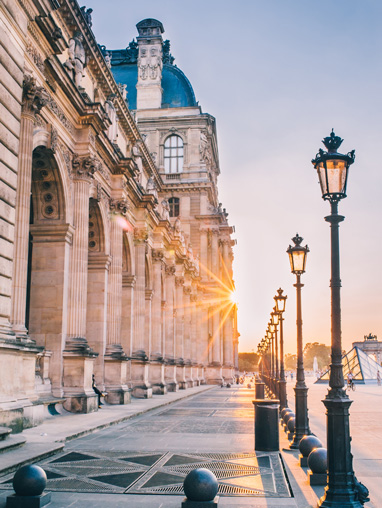
You can admire this painting at the Louvre in Room 5 of the Grande Galerie, on the first floor of the Denon Wing.

Other paintings by Leonardo da Vinci

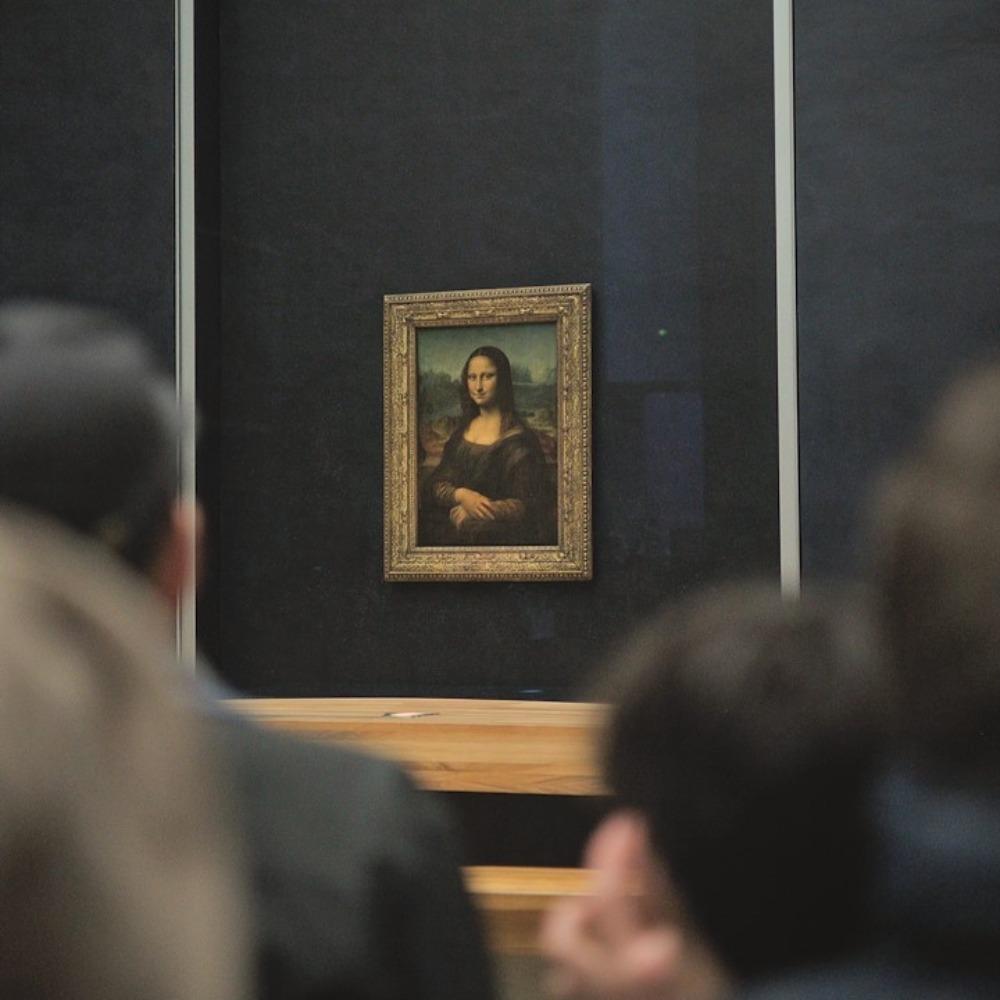
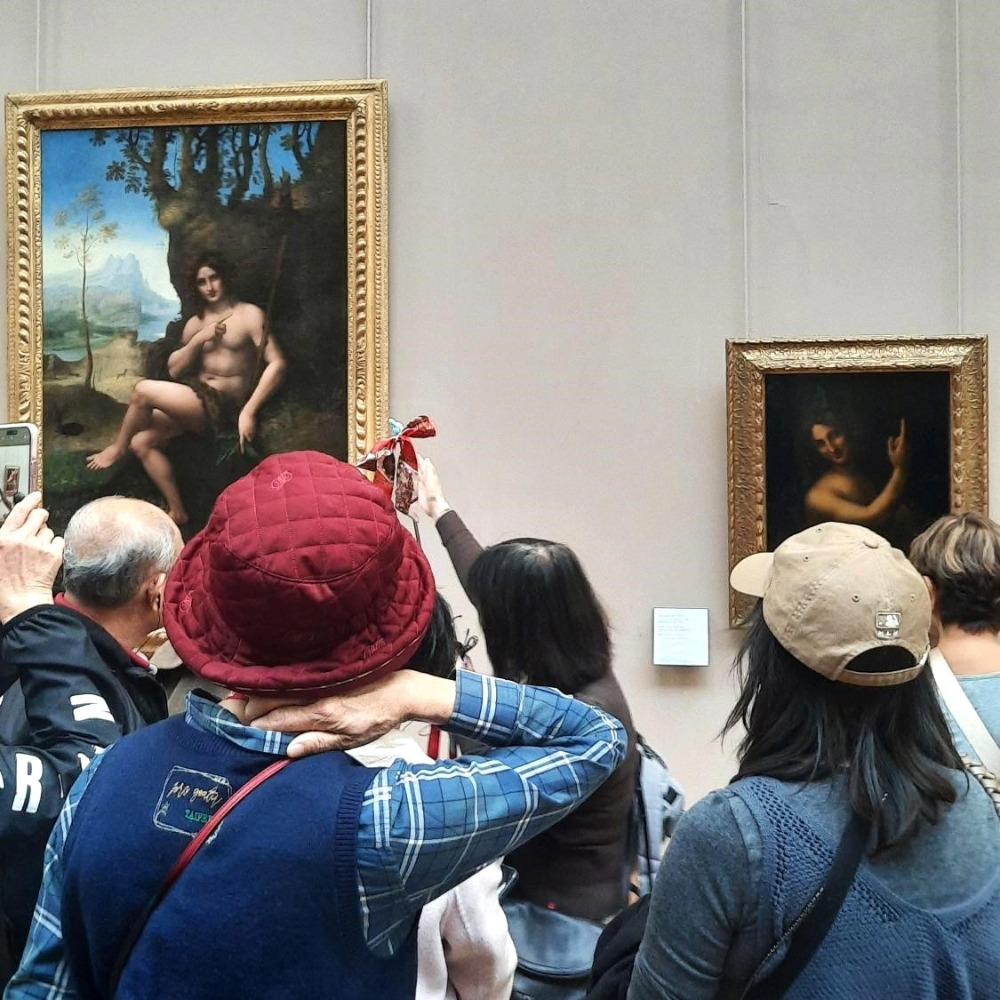
Other works by the artist await you at the Louvre, including the Mona Lisa, the Virgin of the Rocks, the Death of the Virgin, and Noli me Tangere. Together, they offer a remarkable glimpse into the genius of one of the greatest masters in the history of art.

You might also like