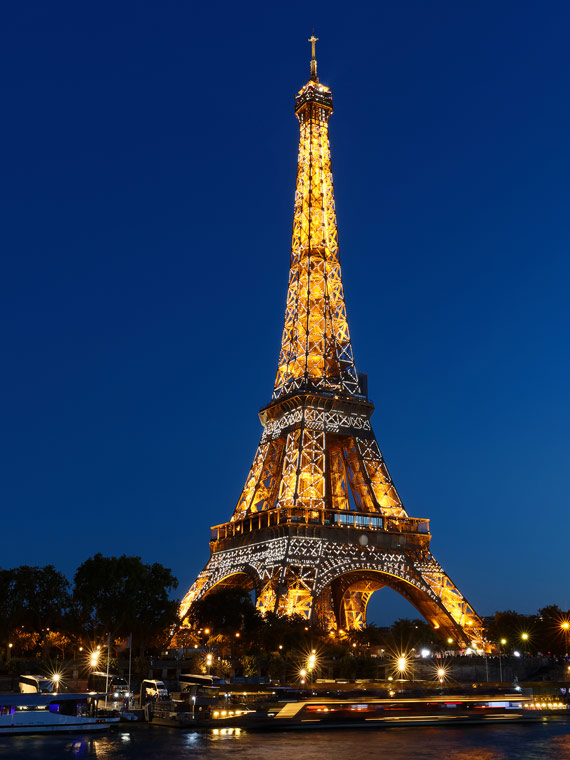
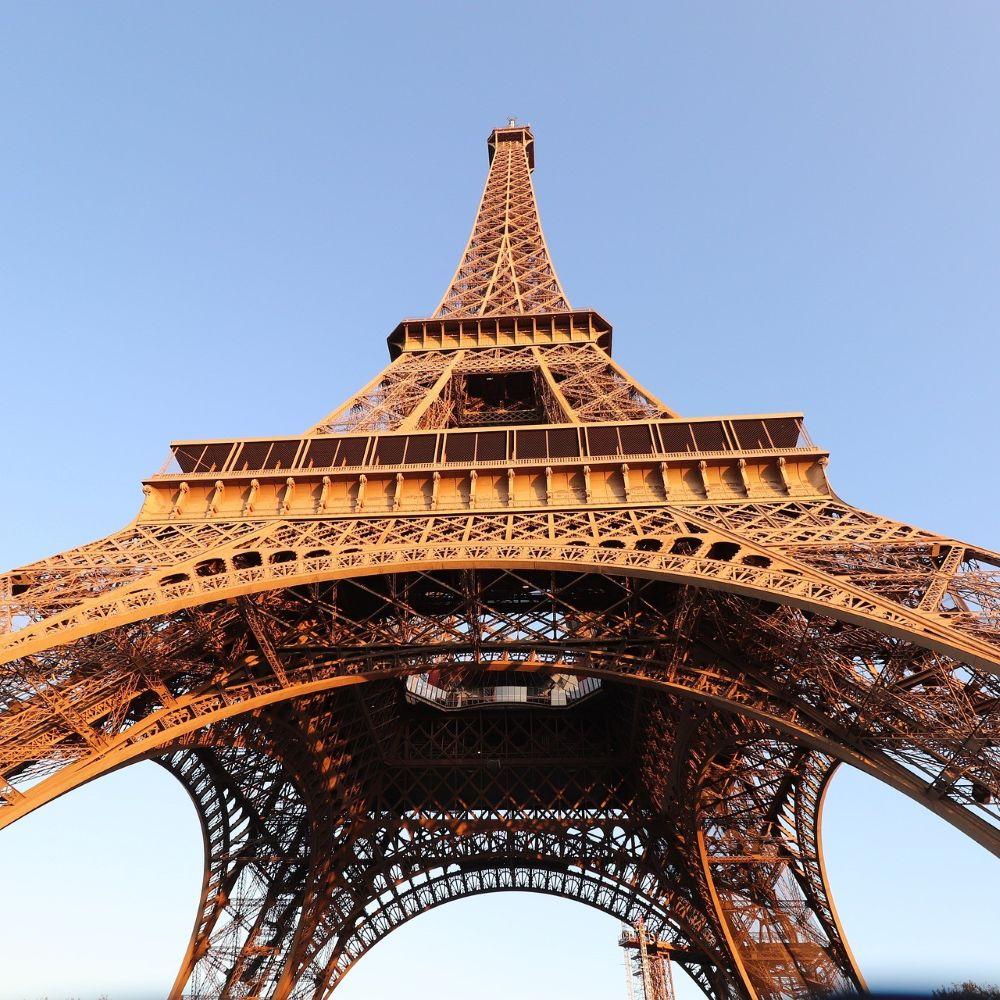
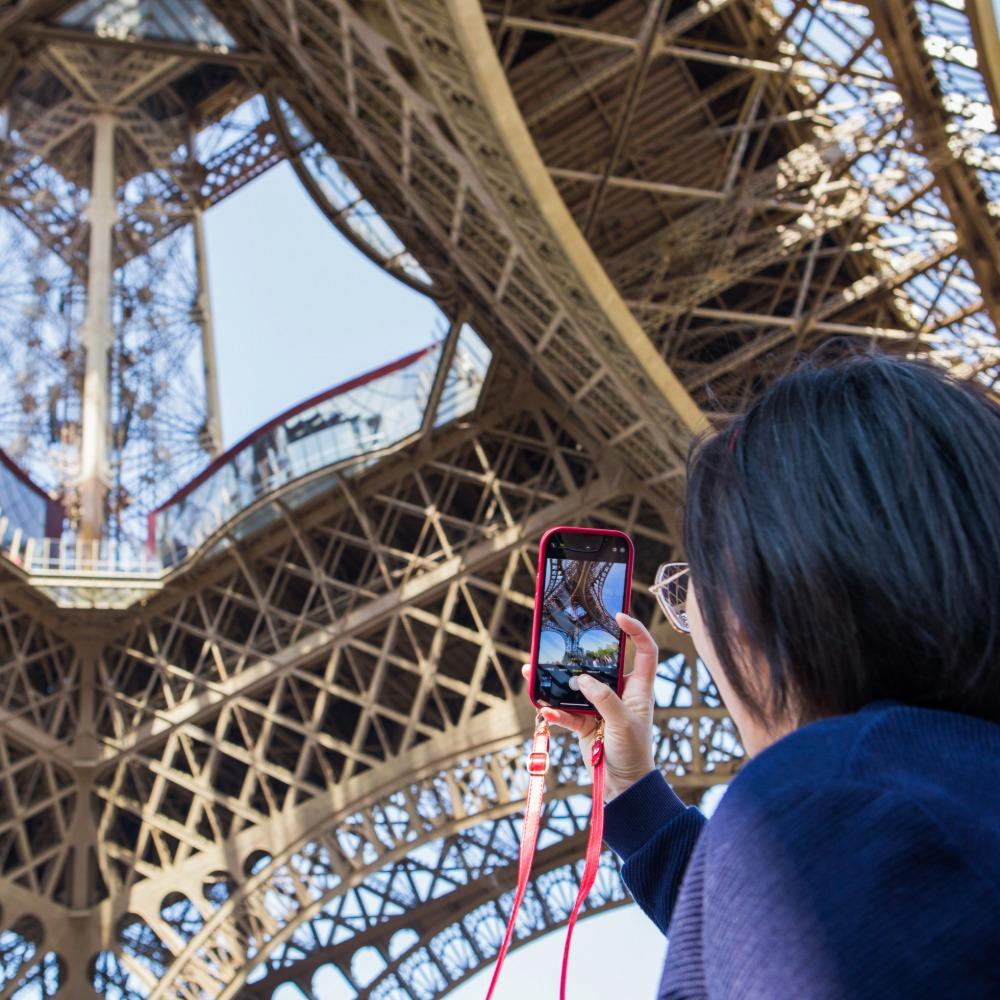
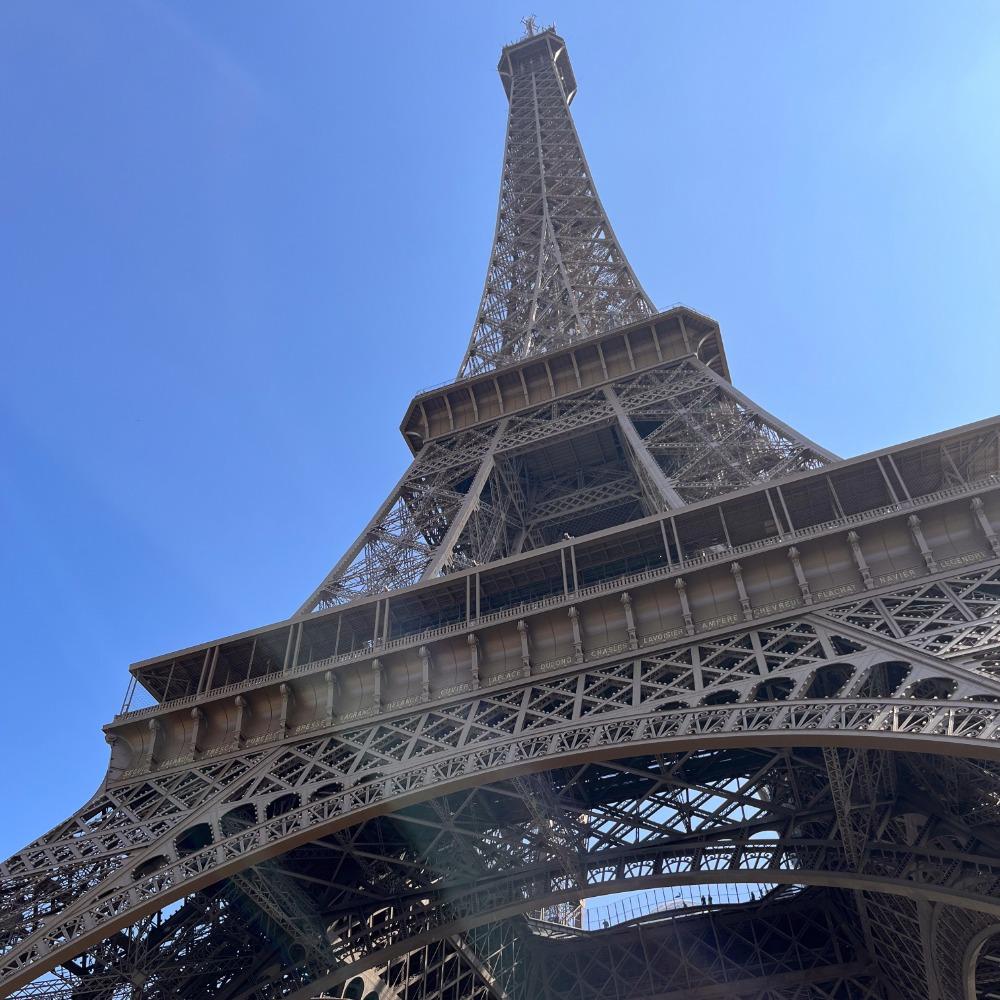
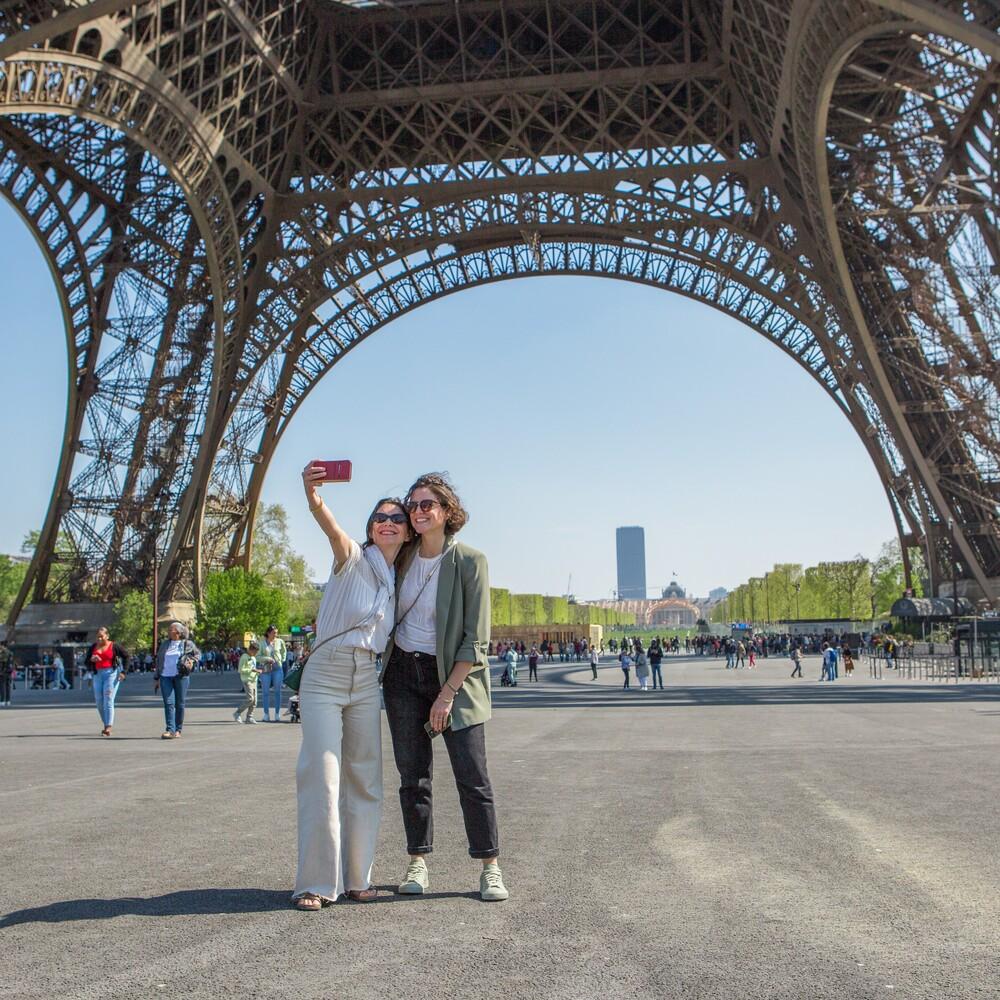
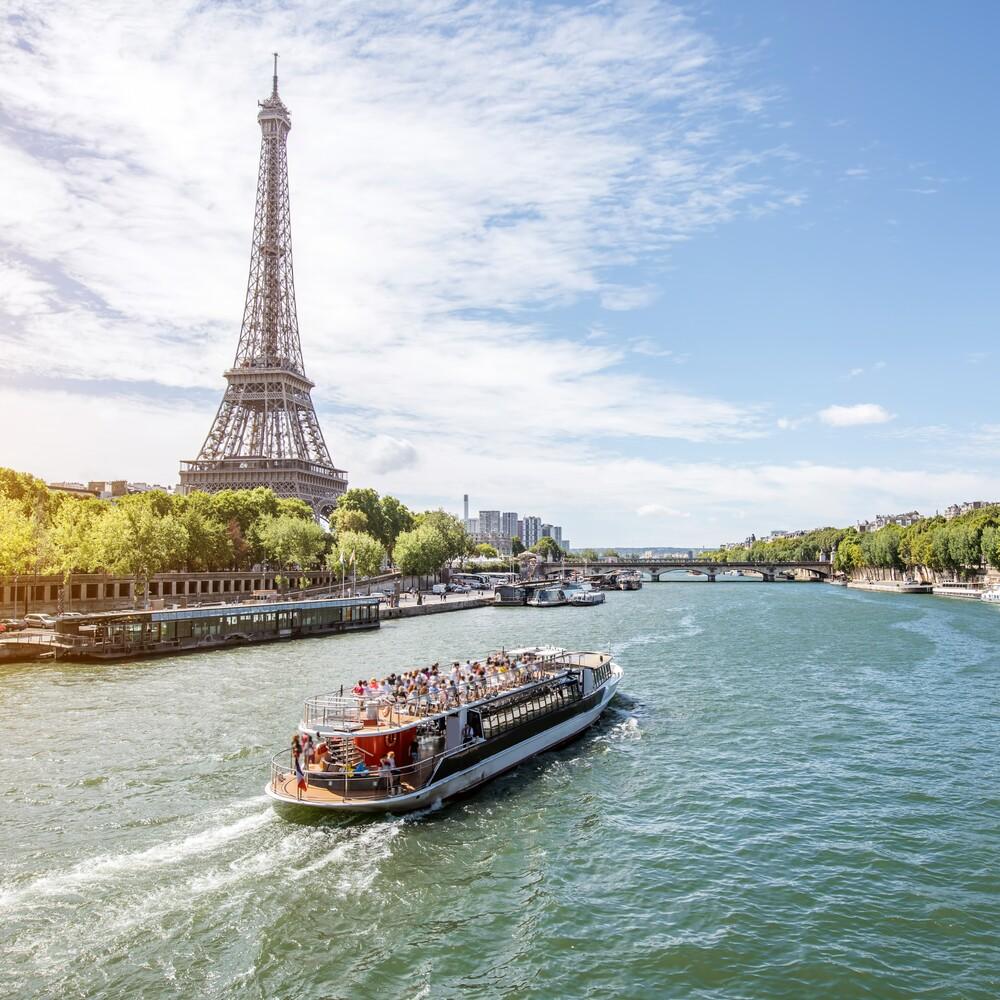
Lit by more than 300 spotlights arranged along its girders, the tower takes on a golden sheen as soon as night falls. Cones of light pick out the structure and reveal it anew, both from below and from the second level, where the tower's curved silhouette frames an unbeatable view. From the very top, you can also watch the beam of the beacon sweep across the sky, its 50-mile (about 80-kilometer) range catching the clouds and the city in a hypnotic rotation.
Light displays for great occasions
More fleeting light displays embellish the Iron Lady from time to time, for celebrations or commemorations such as the Rugby World Cup, Chinese New Year, or, more solemnly, to pay tribute to the victims of the November 2015 attacks. On these occasions the tower becomes a powerful symbol of national unity, rallying Parisians behind the colors of its display.
A romantic moment, and views across Paris
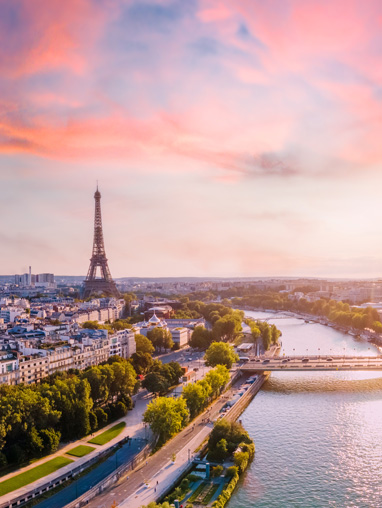
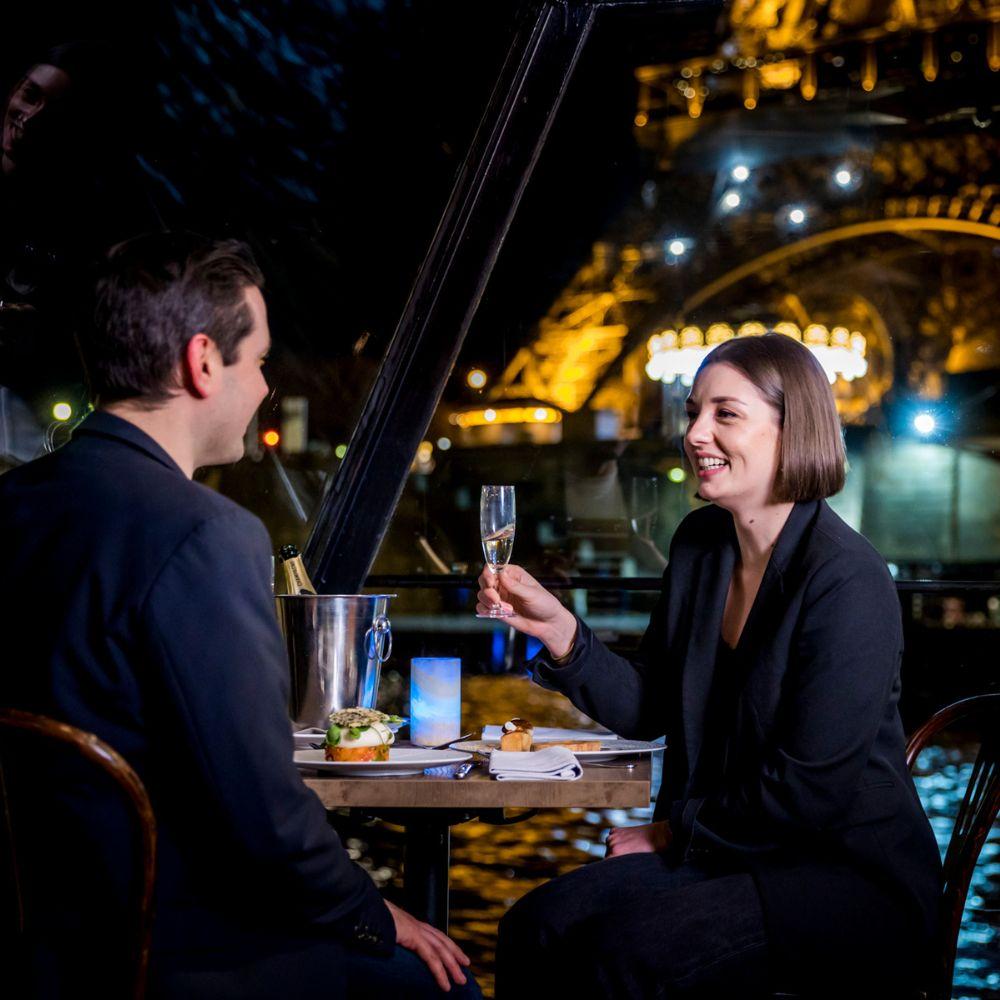
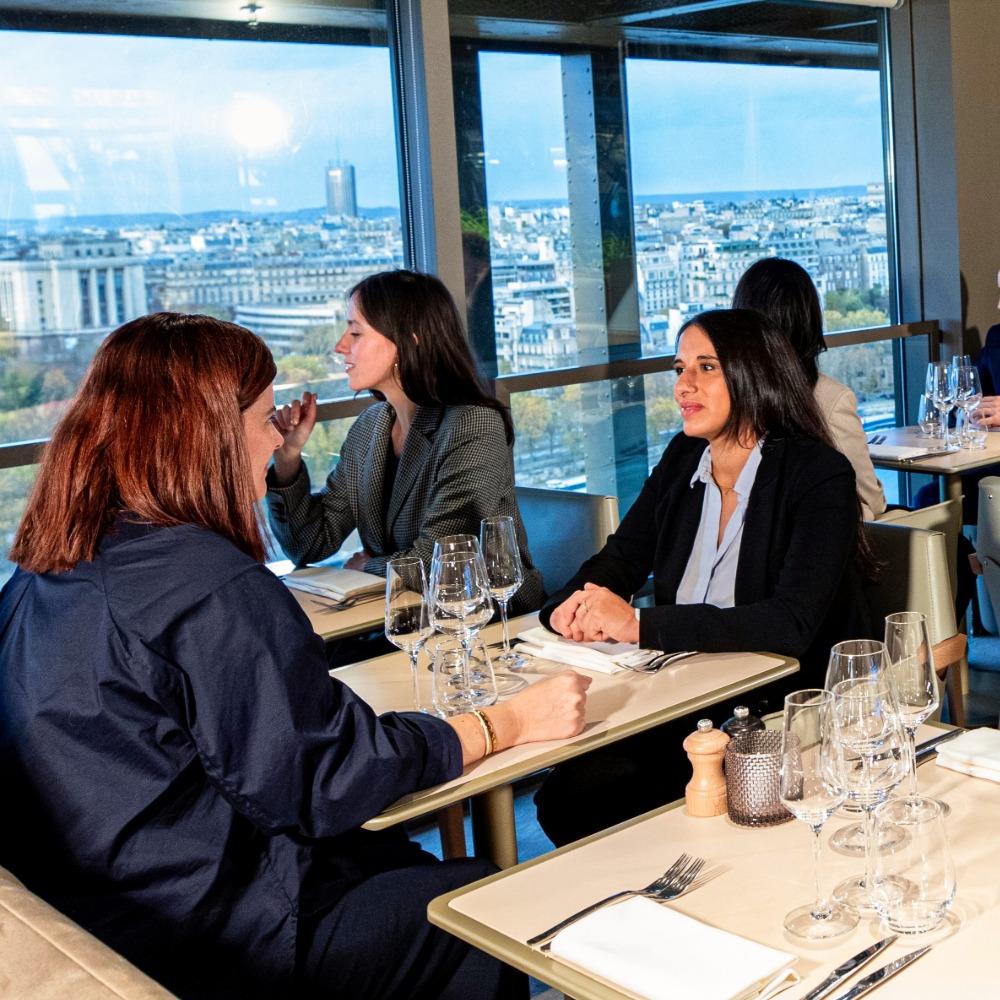
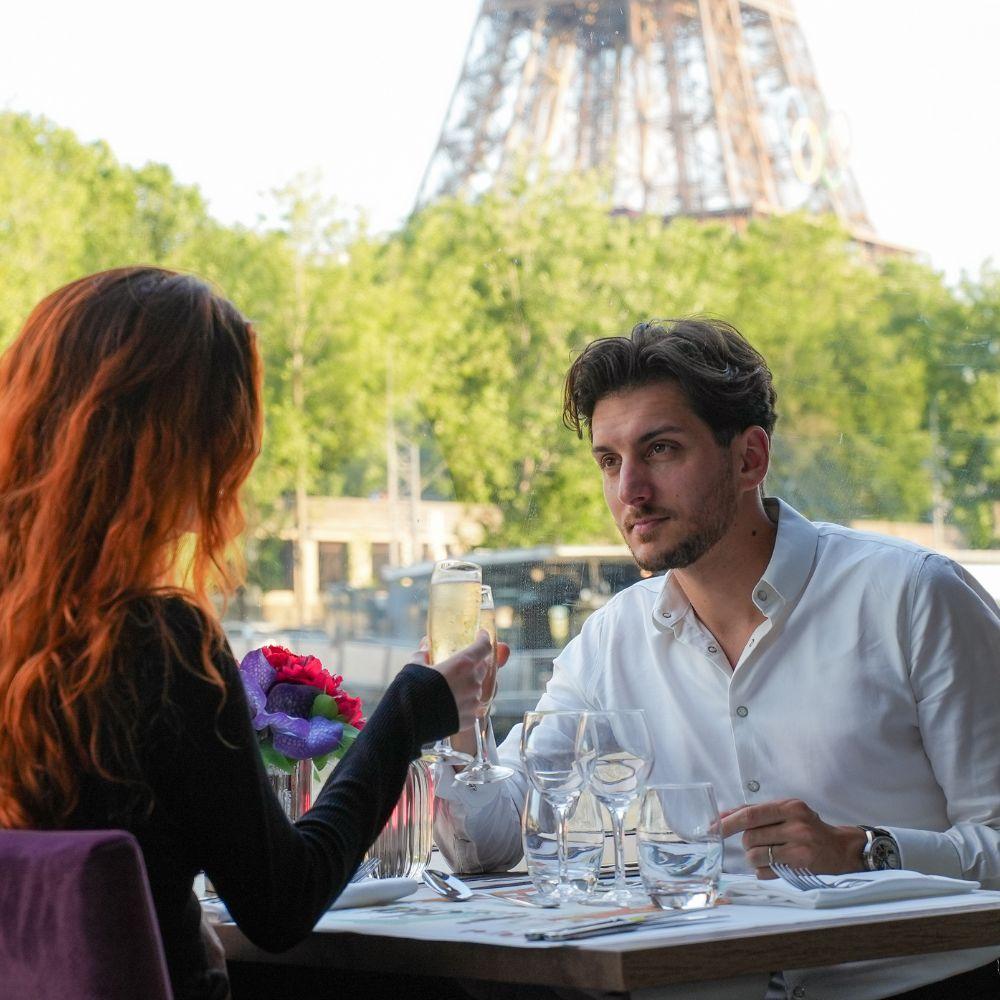
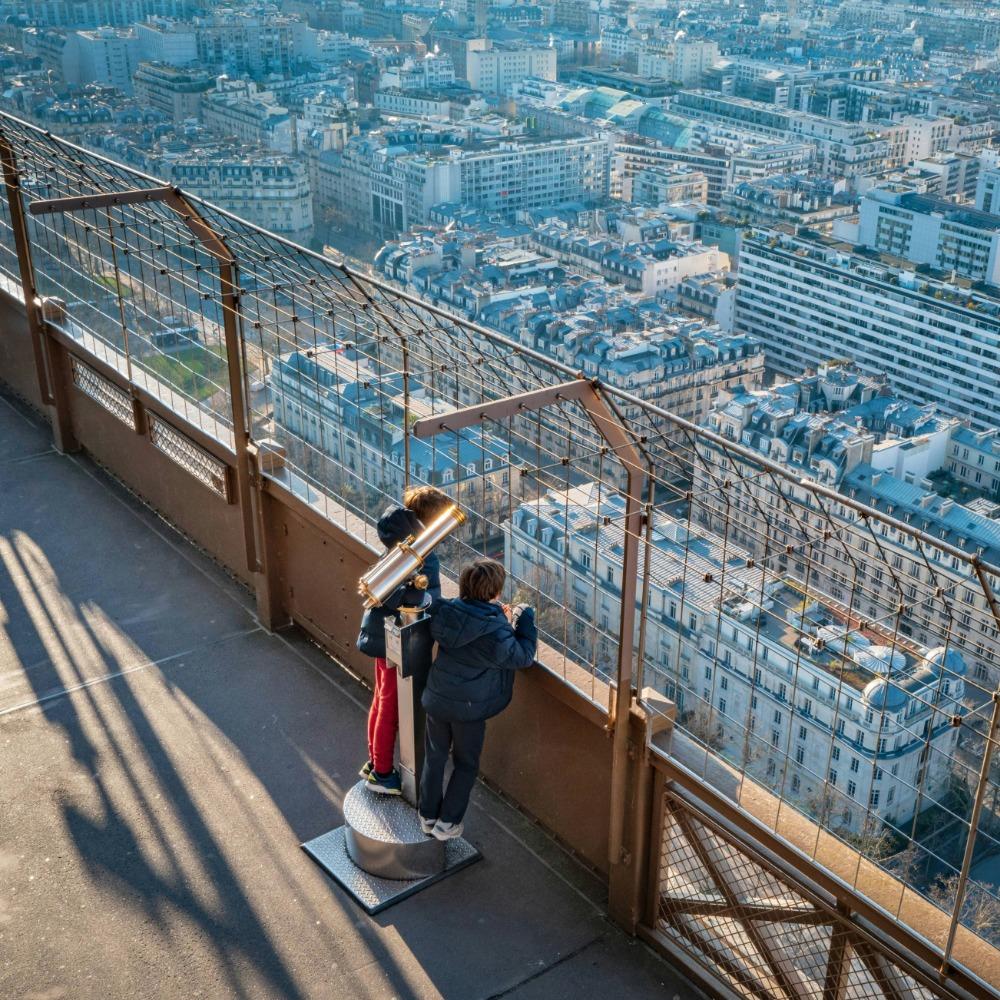
Ascending the monument as night falls also means watching the sun set over the city while the lights gradually flicker on, a romantic and magical moment that appeals to couples, photographers, and anyone who wants to see the capital from a new angle. From the top, the other illuminated monuments of Paris come into view, among them the Arc de Triomphe, the Opéra Garnier, the Louvre, and Notre-Dame de Paris.