From chapel to cathedral
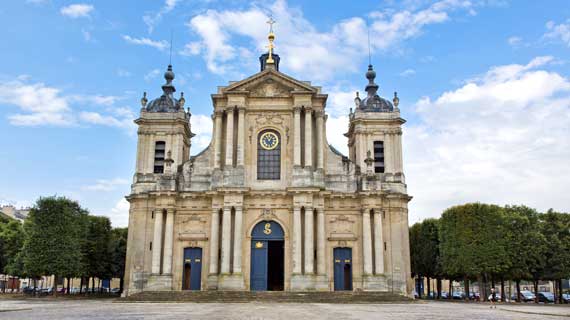
The Saint-Louis de Versailles Cathedral began as a simple chapel, intended to form the south wing of Notre-Dame de Versailles. In 1740, King Louis XV decided to turn it into a church, to be built in front of the chapel. Some time passed before the edifice was regarded as a cathedral, as one part remained unfinished, and it officially gained that status only after the French Revolution. Its story is, in a sense, the story of Versailles itself.
Architecture and history
Designed by Jacques Hardouin-Mansart de Sagonne, the cathedral has been a registered historic monument since 1906. It carries a bulb-shaped dome that rises about 213 feet (65 meters), crowned with a spire. The exterior leans toward the classical, while the interior feels more baroque. The church witnessed several significant events, including the Tennis Court Oath and the swearing-in ceremony of Pope Pius VII on January 3, 1805, during the coronation of Napoleon I. Few buildings in the town hold so much history within their walls.
A rich collection of art
Thanks to royal backing that set its construction in motion, the church, today a cathedral, was able to assemble a rich collection of artwork, some of it dispersed during the French Revolution and later returned in the nineteenth century. The paintings portray scenes from the Bible by artists of the time who also took part in restoring the cathedral, among them François Boucher's depiction of Saint Peter attempting to walk on water. Each canvas adds to the quiet grandeur of the place.