A revolutionary design
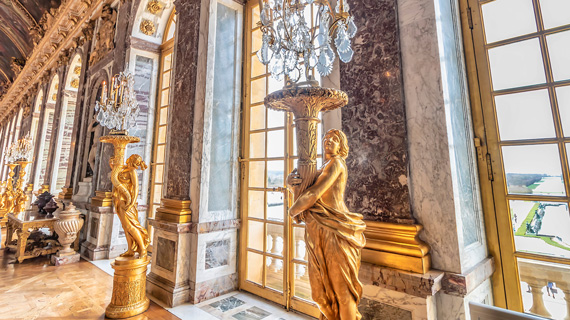
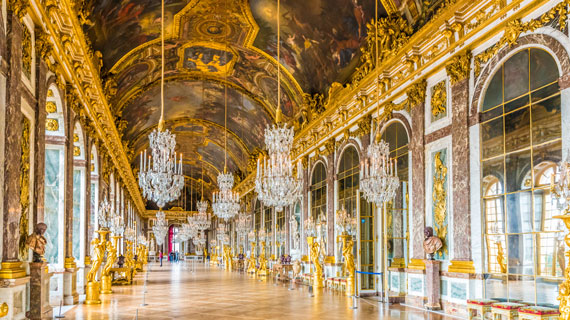
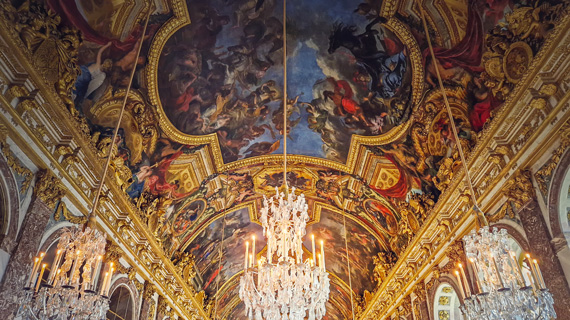
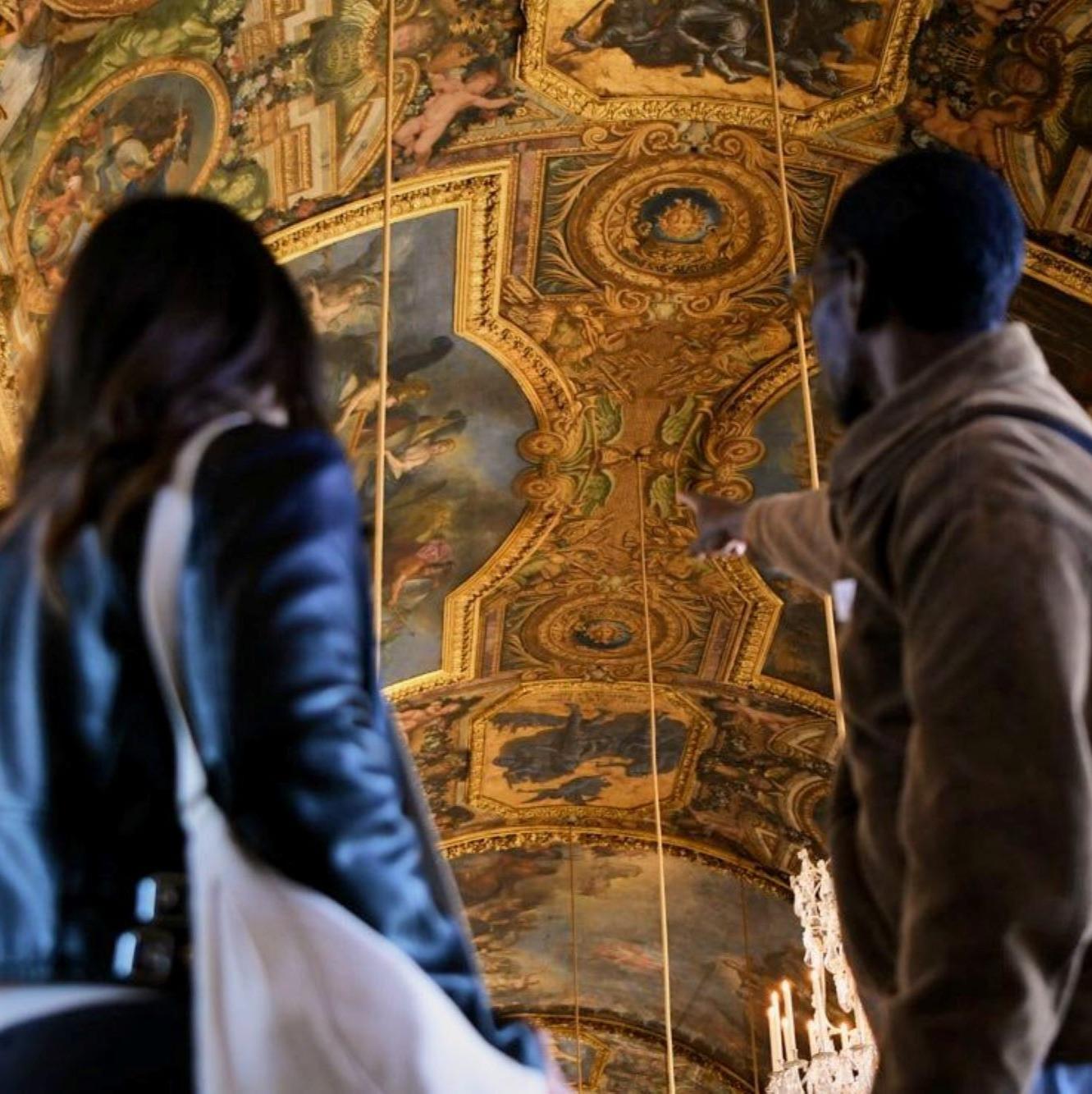
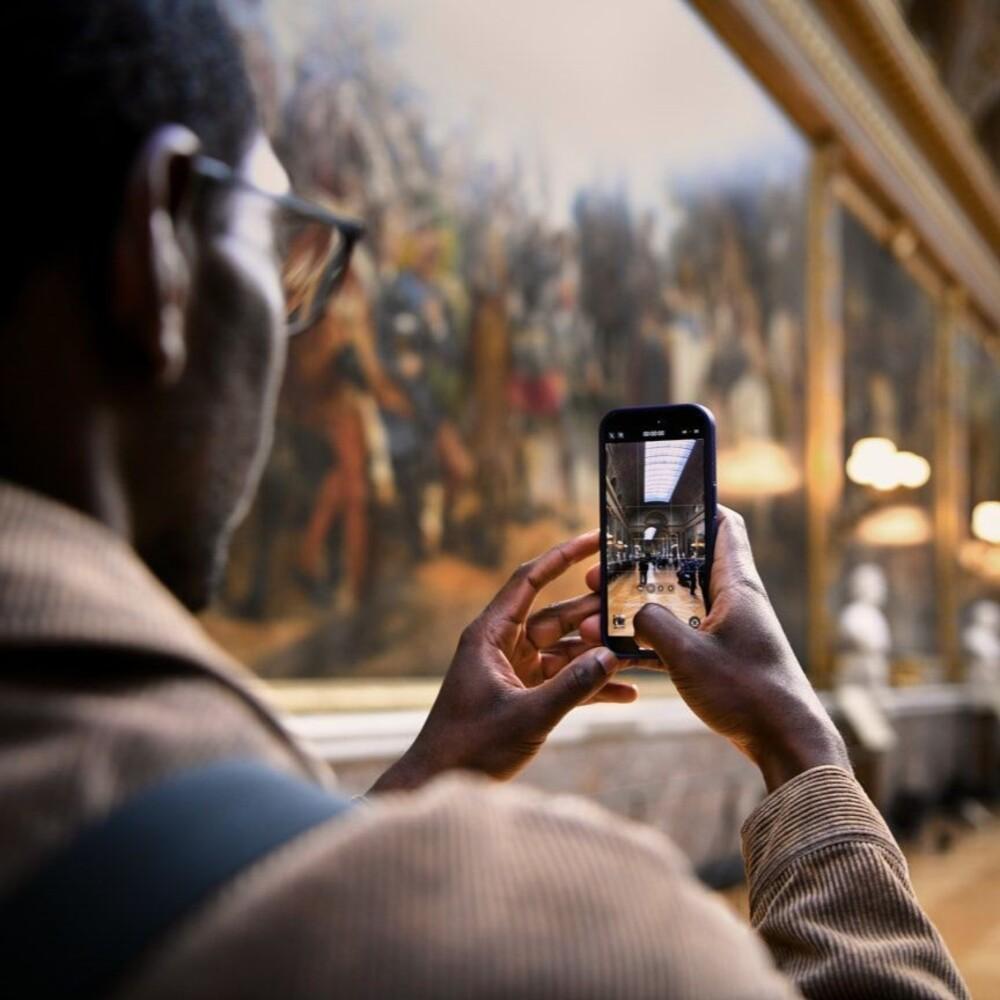
The design of the Hall of Mirrors was entirely revolutionary for the end of the seventeenth century. Its proportions, sculptures, and paintings compose an ever-changing spectacle, in which the light and colors of the gardens are reflected in the immense arched mirrors that run the length of the room. The artworks on display draw mainly on Greek mythology, in the purest neoclassical style, and the arcades are crowned alternately by a head of Apollo and a skin of the Nemean lion. To walk through it is to move within a play of light that shifts with every hour.
A statement of wealth
The presence of so many mirrors was no small matter. At the time, manufacturing them demanded genuine technological prowess, achieved at exorbitant cost, and this was how the kingdom of France displayed its wealth and its manufacturing expertise. More than 10,763 square feet (around 1,000 square meters) of frescoes and paintings, created by the studio of Charles Le Brun, add to the grandeur of the space, lined with its 357 mirrors. Every surface was conceived to impress, and it still does.
A stage for history
The care lavished on the Hall of Mirrors is explained by the important political role it played from its inauguration in 1684. The most respected courtiers and the ambassadors of neighboring kingdoms were received here, awed by the king's grandeur. Symbolism is everywhere, and the hall, regularly restored, has lost none of its splendor, continuing to amaze hundreds of thousands of visitors each year. Few rooms in the world carry such a weight of history within a single expanse of light.