A Chapel for the King
Every royal palace needed its own chapel, where daily Mass was celebrated along with ceremonies such as weddings and baptisms. At Versailles, several chapels occupied different parts of the Palace over the years before the present one was built. In 1699, Louis XIV commissioned Jules Hardouin-Mansart to build a new chapel to the north of the central section of the Palace. After the architect's death in 1708, the work was continued by Robert de Cotte and completed in 1710, bringing decades of royal ambition to fruition.
An Ambitious Masterpiece
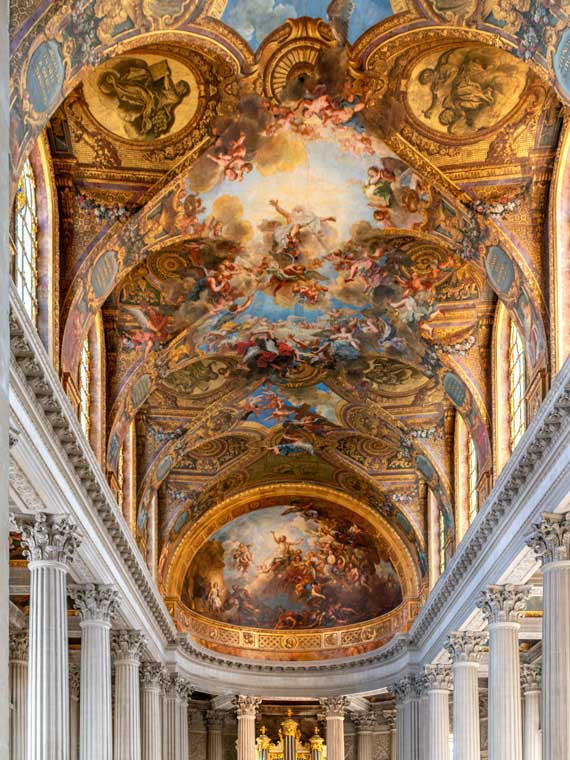
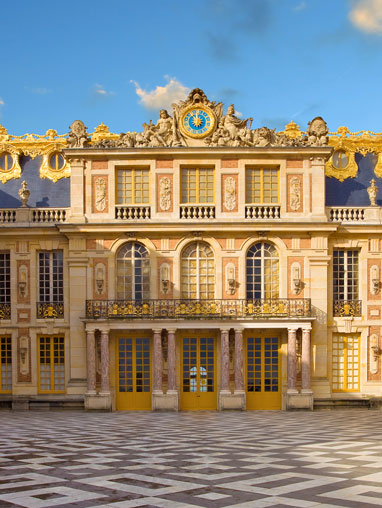
The chapel was one of the largest and most ambitious architectural projects of its time. From the outside, its soaring roof, surrounded by sculptures, sets it apart from the rest of the Palace. Inside, the floor is covered with magnificent polychrome marble paving, while more than 110 sculptors worked on the decoration and some of the finest painters of the period created the works adorning the walls and vault. Every surface was designed to draw the eye, and the spirit, upwards.
Painted Glories
Above the high altar, the semi-dome of the apse features a painting by Charles de La Fosse depicting the Resurrection of Christ. The vault painting by Antoine Coypel depicts The Eternal Father Promising the Coming of the Messiah to the Prophets. Together with the Royal Gallery, from which the King attended Mass, these works make the chapel one of the most moving spaces in the entire Palace. Art and devotion were designed to become one.